Tuesday, September 20, 2016

E.F.Dodd -lady who made classics accessible to kids!


I wish to pay my tributes to a lady, Elizabeth Frances Dodd. Thanks to her, I had endless hours of happiness in my childhood. This lady has (a) written stories for children in English and (b) has also done an amazing job of abridging classic novels for children.

Reading has given me immense pleasure, ever since I can remember. As a child, I loved reading children's books from libraries, comics, and the wonderful stories in my ‘non-detailed English textbooks’ in schools. Here is my take on the term, ‘non-detailed’ text, for those of you who are unfamiliar with the term. In Bangalore’s English medium schools of the 70s, children had two texts or more for English, One was the English text book (?detailed text). Another was a book for poetry while a third was called the non-detailed text. The non-detailed text always consisted of a short stories or it was a short novel i.e. an abridged novel. The full length unabridged novels would have been be unsuitable for young school children for many reasons.

Most of these ‘non-detailed’ text books I had in primary and middle school were either abridged or written by E.F.Dodd and published by Macmillan, India.

Macmillan was a major publication of children's school books and children's books in India since the 70s and maybe even now. I recall that the quality of the pages, and also printing was excellent in the 70s. Some books had glossy pages and had a neat font (I can’t recall the font). They were small in size and had the most wonderful illustrations! My guess is that the illustrations were woodcut prints but I am not sure.

 I was lucky enough to be enrolled in schools which had books by E.F.Dodd, as texts for English. She has done an amazing job of both writing books and abridging classics for children. Her works were exciting and interesting. They were also easy to read and understand.

At a later age, I did try to read the unabridged classics and found some of them too tedious to read and  I had difficulty sustaining my attention to read the full book.  For those tedious classics, I went back to read the beautifully abridged books of E.F.Dodd, though I was no longer a child.

For some reason, the name E.F.Dodd and Macmillan had registered in my mind as a child. I cannot explain why these names had registered in my memory! No school teacher ever went into the author’s details or the details of the publisher in class. As a child reader, I don’t think I knew that these stories were ‘abridged’; I don’t think the name E.F.Dodd meant anything to me then. I was simply engrossed in the stories.

I do recall rereading these non-detailed texts long after I finished the class year. These books were also the first books I read when we bought new texts at reopening of school each year. These books have made such a lasting impression on me that I went to Macmillan publication in M.G.Road(in Shringar complex) Bangalore and bought all the books I could find when I was in my 40s to give my neices! I regret losing some of my books especially two i.e. Lost Horizon by James Hilton and The King’s Sculptor authored by E.F.Dodd herself! I loved the illustrations in Lost Horizon. I think Lost Horizon abridged by E.F.Dodd is available on online book-stores but it’s impossible to even find mention of the book The King’s Sculptor online. (I found only one reference to The King’s Sculptor by Dodd in one website)

If you want your child to read the great classics at a young age, I strongly reccomend E.F.Dodd's books. I am aware that, these days, the classics are made 'easy-to-read' for young readers in other forms such as graphic novels of the classics. I also know many writers have done the job of abridging classics besides E.F.Dodd. But for me, E.F.Dodd's abridged books are the way to go! If I recall right, the books were plot-driven. As a child, I was don’t think I wanted long descriptions; nor was I  interested in ‘style’ of writing. All I wanted was a nice thick plot with a strong story line and that is exactly what I got in the abridged books of E.F.D.

 I found on the internet, the name of E.F.Dodd to be Elizabeth Frances and I found a few books of hers on the internet.  But I am unable to find anything else about her. I wish I could find out more about her.  The books which I could find on the internet, written by or abridged by E.F.Dodd are listed below. I have listed the books in alphabetical order and there may be a few books missing(as they didn’t show up when I googled ) or duplications. If I have not added the original author’s name, it means that the book was authored by E.F.D or I simply could not find the original author in an online search.

,,,,,,,,,,,,,,
The books L loved more as they are rare, drew my heart and feelings for some reason are in bold.

A book of fables and stories by E.F.Dodd and Bhaskar: Simple Graded Readers. Macmillan and Co Ltd, Madras, 1970

A first book of stories Dodd's supplementary readers, Macmillan, Basingstoke 1971

A week without mother  Easy reading Series, Book II. Dodd's Easy Reading. Macmillan and Co. Ltd. Madras. 1967

Adam Bede by George Eliot

Blue Jay favorite stories for children

Brave children of other lands 1954

Children at home and school (Macmillan & Co Ltd, Madras, 1967)

Children of India  Macmillan and Co. Ltd. Madras. 1970

Cinderella

Coral island by R.M.Ballyntyne

Discoverers of new lands I loved this one...and cried when I read the last chapter i.e. discovery of the south pole

Easy reading 1 children-children at home Favorite tales of children

Easy reading 2: a week without mother

Fables and stories for beginners-1953

Fairy tales from Ireland 1961

Far from the madding crowd by Thomas Hardy

 First book of stories
Florence nightingale favorite tales for children

Florence Nightingale 1957(Lives to remember series)

Folk tales from Asia

Fold tales from different lands 1954

Glass princess (I cannot find out if E.F.Dodd is the author or someone else is)

Gora-Rabindranath Tagore's novel published by Macmillan in 1964

Happy beggar

Happy beggar and other stories I enjoyed this one too
  
Heroes of north lands(Tales from the Scandinavian mythology)1958 I loved this and recall reading this over and over again! I think I started loving mythology after reading this. I did not know the word 'Mythology' then but loved these tales anyway.

Kidnapped by Robert Louise Stevenson--another favorite of me and my sister

King of the golden river by John Ruskin

Knights of the round table (King Arthur’s tales) I loved this one too
  Lalitha and her garden


Life they chose (paperback of 92 pages, published by Macmillan; ISBN-10: 0333040155 and ISBN 13: 978-0333040157; shipping weight 503pm(the reason for such detail is I found this on one single website i.e. amazon and I may never see this again)


Living maths for Jamica book 1(not sure if this is the same E.F.Dodd and not sure if book is meant to be stories for children…but it showed up on Google search for stories by E.F.Dodd)

Leon Trotsky and world war one (not sure if this is the same E.F.Dodd and not sure if book is meant to be stories for children…but it showed up on Google search for stories by E.F.Dodd)

Lorna Doone a romance of Exmoor (Macmillan ELT stories to remember readers series) by R.D.Blackmore

Man's best friends

Magic ring and other stories of India

Martin Rattler by R.M.Ballayntyne

Puss in boots-a story based on the traditional fairy tale 1956

Rama and Sita at school(I am not sure if she herself wrote this or what)

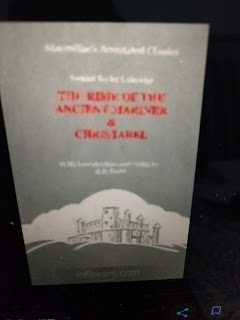
Rime of the ancient mariner and Christabel by Samuel Taylor Coleridge

Simple stories for beginners Macmillan and co of India limited, 1971

Six short stories by famous British authors of the last 100 years by E.F.Dodd

Six short stories (stories to remember)

Six tales from Shakespeare

Snake charmer and other stories

Snowwhite

Stories from famous poems 1953 I liked this one too but can recall only one of them

Stories from Greek myths 2004

Stories from Homer 1955

Stories from Ceylon


Tales from Tagore (stories to remember) I loved this one. Tagore is India's O.Henry to me.

Tales from the Panchatantra:Dodd's supplementary readers, Macmillan, Basingstoke 1971,1957 I liked this one

Tale of the Nibelungs(German epic poem written in 13th century by unknown author and story is based on both myth and history) I would love to read this!

The adventures of Lila and Chandran and other stories 1969

The bluejay and other stories

The clipper of the clouds (also called Robur the conqueror)1959

The coral island by R.L.Ballantyne

The glass princess and other stories Simple graded readers, Macmillan and Co, Madras, 1970

The happy family

The king's sculptor I loved this book and now it’s not available anywhere!

The knights of the round table-the stories of some of their adventures 1960

The life they chose. Macmillan and Co. Ltd. Madras. 1967.(not sure if E.F.Dodd is the writer or she has abridged someone’s novel. I cannot seem to find the ‘original’ author of this book)

The lost horizon by James Hilton My all time favorite! I prefer this to the original. I have fantasized this novel so many times as a child.

The lucky days  by E.F.Dodd Simple Graded readers, Macmillan and Co Ltd, Madras, 1970 (The stories were nice but I think it's wrong to tell children readers that  the day you were born determines your future. I honestly believed that shit for years and years!)

The magic ring and other stories

The mayor of Casterbridge by Thomas Hardy

 The mill on the floss by George Eliot 1961

The moonstone by William Wilkie Collins (abridged in 1956)

The mystery of the lost jewels  Dodd's supplementary readers, Macmillan and Co Ltd, London 1965

The rose and the ring by William Makepeace Thackery 1954

The scarlet pimpernel(stories to remember) by Baroness Emma Orczy 1966

The Sleeping beauty-traditional English fairy tale 1955

The snake charmer and other stories  Dodd's Supplementary Readers. Macmillan Basingstoke. Hongkong. 1971.

The story of Osiris and Isis

The story of Sir Ronald Ross and his fight against malaria(lives to remember series 1958)

The three musketeers

The woman in white (Macmillan stories to remember)1971

Three Shakespeare comedies :prose adaptations (Dodd’s supplementary readers)1960.1953

Three Shakespeare histories

Three Shakespeare tragedies (stories to remember, senior series) 1956

Two stories of R.L.Stevenson

Vanity Fair by William Makepeace Thackery

Westward Ho

I got a lot of names in the list above from the link below. Also from amazon.co.uk and abebooks.com

http://www.bookadda.com/author/ef-dodd
....................
Below is three pieces of information culled from the internet by Googling E.F.Dodd in Google-uk

.........................................................................................
(A) Interesting stories to read aloud for children Ideal for vocabulary enhancement and teaching literary appreciation Profusely illustrated Range of titles Carefully graded vocabulary Makes fascinating reading Books classified as per vocabulary levels of 500, 750, 1500, 2000
Above is a review for the book A happy family by E.F.Dodd. (http://www.lsnet.in/books/the-happy-family-(book-3)-1st-edition_e.-f.-dodd_9780333915394?t=593801)

…………................................................................................

(B)The subnormal child at home…

…Readers

E. F. DODD

A series of original stories and adaptations written for slower pupils within a limited but progressive vocabulary.
{I am depressed to think that E.F.Dodd's books were meant for the subnormal child! Was I a subnormal child and therefore loved these books without find them too challenging to be enjoyed? I hope not! I prefer to believe the other description of her books which state that these books were meant for Indian schools. In India, English is not the spoken language at home, at least when I was a child and so these simplified books were easy to read and understand.}

Titles on application. Prices range from 9d to Is 3d

MACMILLAN & CO LTD

St Martin's Street WC2

I have typed here whatever was in (the page 71 of Book reviews) the page which showed up on the internet.
………………..

 (C)

The  reviews of E.F.Dodd’s books I could find online is given below. The first review is from the link http://eltj.oxfordjournals.org/content/IX/2/71.extract
ELT refers to English Language Teaching Journal, a peer reviewed journal.
.................
(D) From the journal , The woman teacher dated October 1958, Volume XL number one, page 14 under book reviews I came across two references to E.F.Dodd and I have typed it here below.

Tales from the Panchatantra retold by E.F.Dodd (Macmillan 9d.). This is a book of Indian folktales written for students in their 3rd year of English in schools where it is taught as a second language. The 12 stories all with a moral are quite suitable for primary school children or for telling to the younger ones.
Florence Nightingale: A simple account of the life lf Florence Nightingale in a new series of supplementary readers. 2s.
Published earlier was the story of Sir Ronald Ross. 1.6d.
Macmillan & Co Ltd St.Martin's St. -WC2
Published by the national union of women teachers. 41 Cromwell road, SW7
and printed by the Lyndan Press ltd(TU) Printing house, Suttonm road, southend-on-sea, Essex.
....................
(E)
https://books.google.ca/books?id=zap1xqzPU24C&pg=PT28&lpg=PT28&dq=gora,+e.f.dodd&source=bl&ots=XbrY0-J8cb&sig=vdDWr4vOn3e7B3-RM2fyBOZVtYE&hl=en&sa=X&ved=0ahUKEwi0nJr5ibXPAhWImh4KHQ42BWgQ6AEIJTAD#v=onepage&q=gora%2C%20e.f.dodd&f=false
above is a link to the review of E.F.Dodd's Gora by R.Tagore


(1)Six tales from Shakespeare Told by E.F.Dodd. 97 pages. 1s.8d

(2)Tales from Tagore. Adapted by E.F.Dodd, 71 pages. 1s. 3d

(3)Nicholas Nickleby. Charles Dickens. Adapted by Margery Green. 107 pages. 1s. 10d

(4)Westward Ho! Charles Kingsley.Retold by E.F.Dodd. 132 pages, 2s. 2d.

(5)The mayor of Casterbridge. Thomas Hardy. Adapted by E.F.Dodd. 132 pages. 2s. 2d. Macmillan.

These books produced in India and  intended primarily for Indian secondary schools, form a welcome addition in the range of simplified readers. The style is simple without being childish, and a vocabulary range of 2000 words has been adhered to without awkwardness.

The Mayor Of Casterbridge is perhaps the most successful of the series. In the book Nicholas Nickleby, the work of streamlining the plot and eliminating irrelevant incidents and characters has been well done. The same unfortunately cannot be said of Westward Ho!

In the Six Tales From Shakespeare, it is a little surprising to see Antonio referred to as the brave young merchant of Venice. Although nothing in the text contradicts this attribution Antonio is generally presented on the stage as a man who is senior in years as well as standing.
The above article is from the article, titled, "Macmillan's stories to remember: in simple English, pages 71-72 ELT journal, 1955,  IX (2) doi:10.1093/elt/IX.2.71
,,,,,,,,,,,,,,,,,,,,,,,,,,,,,,,,,,,,,,,,,,,,

Below is the same list but with ISBN information too.
A book of fables and stories by E.F.Dodd and Bhaskar: Simple Graded Readers. Macmillan and Co Ltd, Madras, 1970

A first book of stories Dodd's supplementary readers, Macmillan, Basingstoke 1971

A week without mother  Easy reading Series, Book II. Dodd's Easy Reading. Macmillan and Co. Ltd. Madras. 1967

Adam Bede by George Eliot


  • Paperback
  • Publisher: Macmillan; Abridged edition edition
  • Language: English
  • ISBN-10: 0333062906
  • ISBN-13: 978-0333062906
  •  


    Blue Jay favorite stories for children

    Brave children of other lands 1954

    Children at home and school (Macmillan & Co Ltd, Madras, 1967)

    Children of India  Macmillan and Co. Ltd. Madras. 1970

    Cinderella

    Coral island by R.M.Ballyntyne

    Discoverers of new lands I loved this one...and cried when I read the last chapter i.e. discovery of the south pole

    Easy reading 1 children-children at home Favorite tales of children

    Easy reading 2: a week without mother

    Fables and stories for beginners-1953

    Fairy tales from Ireland 1961

    Far from the madding crowd by Thomas Hardy


     First book of stories


  • Paperback: 36 pages
  • Publisher: Macmillan
  • ISBN-10: 0333037677
  • ISBN-13: 978-0333037676


  • Florence nightingale favorite tales for children

    Florence Nightingale 1957(Lives to remember series)

    Folk tales from Asia

    Fold tales from different lands 1954

    Glass princess (I cannot find out if E.F.Dodd is the author or someone else is)

    Gora-Rabindranath Tagore's novel published by Macmillan in 1964

    Happy beggar

    Happy beggar and other stories I enjoyed this one too


  • Paperback: 48 pages
  • Publisher: Macmillan
  • Language: English
  • ISBN-10: 0333086430
  • ISBN-13: 978-0333086438
  •  

    Heroes of north lands(Tales from the Scandinavian mythology)1958 I loved this and recall reading this over and over again! I think I started loving mythology after reading this. I did not know the word 'Mythology' then but loved these tales anyway.

    Kidnapped by Robert Louise Stevenson--another favorite of me and my sister

    King of the golden river by John Ruskin

    Knights of the round table (King Arthur’s tales) I loved this one too


  • Paperback: 60 pages
  • Publisher: Macmillan Education
  • Language: English
  • ISBN-10: 0333098005
  • ISBN-13: 978-0333098004
  •  


    Lalitha and her garden


    Life they chose (paperback of 92 pages, published by Macmillan; ISBN-10: 0333040155 and ISBN 13: 978-0333040157; shipping weight 503pm(the reason for such detail is I found this on one single website i.e. amazon and I may never see this again)


    Living maths for Jamica book 1(not sure if this is the same E.F.Dodd and not sure if book is meant to be stories for children…but it showed up on Google search for stories by E.F.Dodd)

    Leon Trotsky and world war one (not sure if this is the same E.F.Dodd and not sure if book is meant to be stories for children…but it showed up on Google search for stories by E.F.Dodd)

    Lorna Doone a romance of Exmoor (Macmillan ELT stories to remember readers series) by R.D.Blackmore

    Man's best friends

    Magic ring and other stories of India

    Martin Rattler by R.M.Ballayntyne

    Puss in boots-a story based on the traditional fairy tale 1956

    Rama and Sita at school(I am not sure if she herself wrote this or what)

    Rime of the ancient mariner and Christabel by Samuel Taylor Coleridge

    Simple stories for beginners Macmillan and co of India limited, 1971

    Six short stories by famous British authors of the last 100 years by E.F.Dodd

    Six short stories (stories to remember)

    Six tales from Shakespeare

    Snake charmer and other stories

    Snowwhite

    Stories from famous poems 1953 I liked this one too but can recall only one of them

    Stories from Greek myths 2004

    Stories from Homer 1955

    Stories from Ceylon


  • Paperback: 52 pages
  • Publisher: Macmillan
  • ISBN-10: 0333093046
  • ISBN-13: 978-0333093047


  • Tales from Tagore (stories to remember) I loved this one. Tagore is India's O.Henry to me.

    Tales from the Panchatantra:Dodd's supplementary readers, Macmillan, Basingstoke 1971,1957 I liked this one

    Tale of the Nibelungs(German epic poem written in 13th century by unknown author and story is based on both myth and history) I would love to read this!

    The adventures of Lila and Chandran and other stories 1969

    The bluejay and other stories

    The clipper of the clouds (also called Robur the conqueror)1959

    The coral island by R.L.Ballantyne

    The glass princess and other stories Simple graded readers, Macmillan and Co, Madras, 1970

    The happy family

    The king's sculptor I loved this book and now it’s not available anywhere!

    The knights of the round table-the stories of some of their adventures 1960

    The life they chose. Macmillan and Co. Ltd. Madras. 1967.(not sure if E.F.Dodd is the writer or she has abridged someone’s novel. I cannot seem to find the ‘original’ author of this book)

    The lost horizon by James Hilton My all time favorite! I prefer this to the original. I have fantasized this novel so many times as a child. I loved the woodcut illustrations in the Macmillan India publication of this book

    The lucky days  by E.F.Dodd Simple Graded readers, Macmillan and Co Ltd, Madras, 1970

    The magic ring and other stories

    The mayor of Casterbridge by Thomas Hardy

     The mill on the floss by George Eliot 1961

    The moonstone by William Wilkie Collins (abridged in 1956)

    The mystery of the lost jewels  Dodd's supplementary readers, Macmillan and Co Ltd, London 1965

    The rose and the ring by William Makepeace Thackery 1954

    The scarlet pimpernel(stories to remember) by Baroness Emma Orczy 1966

    The Sleeping beauty-traditional English fairy tale 1955

    The snake charmer and other stories  Dodd's Supplementary Readers. Macmillan Basingstoke. Hongkong. 1971.

    The story of Osiris and Isis

    The story of Sir Ronald Ross and his fight against malaria(lives to remember series 1958)

    The three musketeers

    The woman in white (Macmillan stories to remember)1971

    Three Shakespeare comedies :prose adaptations (Dodd’s supplementary readers)1960.1953

    Three Shakespeare histories

    Three Shakespeare tragedies (stories to remember, senior series) 1956

    Two stories of R.L.Stevenson

    Vanity Fair by William Makepeace Thackery

    Westward Ho
    :::::::::::::::::::::::
    The photos below are the book covers of the books abridged/written by E.F.Dodd.

    Above must be a newish cover...not to my liking

    The covers above (a week without mother) and below (the blue jay...) are definitely old...50-70 years old. I like these. I have not read the one above but definitely recall the cover of the blue jay...from my childhood days!


    The covers of folk tales from Asia (above) and six short stories are newer and not to my liking




    I don't like this cover of The lost horizons above. I loved the one I had, in school, in the 70s, an older edition, with woodcut etching illustrations both inside the book and on the cover.





    The cover of 'heros of north lands' above is what I had as a child! I loved and re-read this tiny book of Norse mythology about a million times!


    Tuesday, August 23, 2016

    Feedback of psychological testing to adult developmentally delayed


    Feedback of psychological testing to adult developmentally delayed individuals


    Purpose of the assessment:
    Feedback: process, purpose, people involved, time taken.
    Analysis of the process of feedback:

    Adult clients with developmental delay(i.e. mental retardation or subnormal intelligence) or adults who are suspected to have developmental delay are referred for assessment to psychologists and psychometrists( I will call them assessors in this article) at my organization in a major city of  Canada. The reasons for the referral for assessment are :

    ·        After the client is assessed and found to be developmentally delayed, he is found eligible for accessing the services of the Developmental Sector of the Canadian province he's living in. He is eligible for receiving a monthly pension i.e. money to support himself.

    ·        If the client is transitioning out of school and has had no recent cognitive assessment, he is referred for assessment. Identifying his current cognitive strengths and deficits will help to find the right fit for him for employment, future studies and so on.

    ·        If the developmentally delayed client has difficulties getting along in the society, getting along with his family, an assessment of his current cognitive functions will help the people who interact with him, understand if the cognitive deficits are to some extent the cause of his maladaptive behaviours.


    Once the assessment is completed, feedback about the findings of the assessment is given to the client by the assessor who did the assessment.

    Feedback is the process of letting the client know, after the assessment is completed, about his current strengths and deficits with regard to cognitive functions which were tested such as intelligence, attention and concentration, memory, thinking, reasoning, language abilities, mathematical abilities, etc. If the client consents, people who are closely involved with the client, are also invited to attend the feedback. The people may be family members who live with him or take care of him or a case manager who is working with him or staff from the group home he lives in.

    Feedback is usually done in one single session ranging from 45 minutes to one and half hours. The assessor who did the assessment explains the tests  used to assess the client, explains about his performance and the areas of his strengths and weaknesses. The assessor tells the client to ask for clarification if he did not understand and voice disagreement if any.

    There are typically no booster sessions done i.e. the feedback regarding the assessment  is not given more than once.

    Subsequently a copy of the assessment report is given to the client and with his signed consent, copies are also given to professionals who may be able to use it to the advantage of the client such as his GP, psychiatrist, neurologist, his school if he is going to enroll in a school.

    Diligent care is taken so that the report is not given to people who may use the assessment against his best interests.

    In my opinion, the process of feedback appears okay at the superficial level. But I believe that  there are many concerns which necessitate tweaking of the feedback process. I believe that this tweaking should be done in all centers of psychological testing if the problems listed below are discovered.

    1.     Giving feedback, the way it is done at present, seems to be ‘going through the motions’ than it making any sense to the client, especially if they have moderate developmental delay or greater. Even those who are the low end of mild do not understand 99% of what is being said to them.

    2.     Feedback can be understood by clients with mild developmental delay or higher levels of functioning if

    Done slowly,

     Without using jargon,

    With repetitions where needed,

     Explaining the cognitive strengths and weaknesses of the client by giving examples of real life situations where the assessed cognitive function is used.

    It is meaningless to rattle off the names of the tests used and the functions tested using psychological jargon such as working memory, abstract reasoning, etc. The use of these terms is not understood by the laypeople accompanying the clients for the feedback. And these terms mean almost nothing to the clients as they are developmentally delayed. They may understand the three terms in a rudimentary way i.e. intelligence, memory and attention but they would not understand words such as abstract reasoning, visuospatial ability and so on. Yet,assessors don't take care to avoid these terms or explain what they mean, during the feedback.

    3.     Most clients, even those with higher abilities, do not remember after a few days, what they heard in the feedback session.  If they don’t remember, there is no way they could use the information in their life in a meaningful manner.

    4.     Some assessors give recommendations while some do not. The recommendations given should be in terms simple enough to be understood and applied by the laypersons reading it. It should be given in simple language, with examples and as many day-to-day, real-life applications as possible.

    5.     I believe that someone needs to do the following to make the assessment report more meaningful and useful. 
    •  collect a range of tasks typically done in today’s Toronto homes and offices;
    •   these tasks are divided into categories i.e. those which can be done by those with borderline IQ, mild, moderate and severe IQ
    • the tasks can also be arranged by the different cognitive functions needed to do them
    • the clients be informed the tasks within their capacities based on the assessment.
    What I have pointed above is not something new but is something done in the vocational assessment reports. I strongly believe that psychologists who do cognitive assessment for the developmentally delayed adults should take these tips from vocational assessment reports.

    6.     If it is possible to consolidate the cognitive strengths and weaknesses, along with the other diagnosis’s symptoms (autism, anxiety, depression, etc) and any behaviours observed in the testing and give a hypothesis about the client’s best functioning and areas where the client will likely have problems.
                7. I believe that booster sessions of feedbacks should be done a few times. It would be ideal if the assessor or someone talks to the client about a week and a month and a few months after the feedback and discover how much information from the feedback has been retained. If at least a little practical information has been retained and he client is acting on it, indicates that the feedbadck has been useful. However if the client has no changes in his behaviour or plans even after feedback, it means that


    The reasons why I want the feedback interview to be tweaked are many. I have counseled about 300+ clients over the last 8 years.

    My job is counselling adults with DD. DD adults are referred to me for counselling for a range of reasons such as anxiety, depression, anger management, OCD, difficulty getting along with others, etc. 
     I discovered, during the course of doing my job,  that many or a majority of the developmentally delayed adult clients referred to me  did not have insight about their developmental delay or autism.
    I realized that counselling would be more effective if I first got them to realize they have DD or ASD and secondly they accept that they have DD or ASD.  Yet,  I am not saying  that all clients with insight  about their DD/ASD benefit more from counseling . I have had cases where the client's insight about his DD makes him more difficult to counsel. For example,  Mr.X who knows he is different from others due to his developmental disability has been angry, frustrated and not benefitting from counseling for a very long time compared to a cheerful happy-go-lucky client who has no idea he’s delayed.

    To counsel a person who has no insight that they are delayed is difficult at times. Unless the person  understands  and accepts he is delayed, he will not understand why he cannot do certain things and will continue to strive in the wrong direction. The failure leads to further lowering of self-esteem. I have had several cases with this issue.

    Two clients I counselled  believe they are learning disabled and not developmentally disabled.
    (1) I have tried to educate client ABC over many sessions about her developmental disability and tried to get her to set more realistic goals for herself. She continues to be in denial and is registering for a writing course to become a writer. There are four other possible pressures contributing to her denial of DD:(a) her parents, (b)her siblings , (c)her boy-friend,(d) her own lack of insight or denial. Her parents constantly urge her to 'do better' so that she can have a job, a house, a car, a career like her older sister and like 'other people'. Her parents and siblings themselves are in denial about her disability despite the psychologist explaining to them about  her cognitive assessment results. The parents are immigrants with the typical immigrant dreams of success for their children. Her boy-friend does not know she is developmentally disabled and he urges her to study well and aspire for a  'better job' with a 'higher' income & become 'successful'  and give up her current  job  i.e. waiting tables at a coffee shop, which is within her capacity. Her boy-friend wants her to get into college and later get a better job which is impossible for her level of intelligence. This person has been 'studying' for the last 4-5 years and getting nowhere. Being from a well-to-do family, she has not faced any financial difficulties due to her choices. The years past which could be used to learn a skill within her capacity or get work experience have been used to attend a college where she's learning nothing. But she is having a good time with her friends there and she's not unhappy. This is one positive aspect of this case.

    (2)Client DEF has told me that she is not 'retarded' like others and she is only 'learning disabled'. She has no interest in building a friendship with her peers at a day-program for the DD adults she attends. Instead she tries to befriend 'typical' boys who lose interest in her very quickly. She has spent years chasing after these 'typical' boys or boys who are not diagnosed with developmental disability, boys who are in college or working. She does not get it that they lose interest once they get to know her well and continues in this pursuit. She's resolute in her avoidance of her peers i.e. guys with developmental disability who are with her in her program.

    (3)The client GHI is moderately delayed and in her mid 30s. She does not ask  a question to be repeated if she does not understand. Instead she says, " I don't want to talk about it' or 'I am not interested' or some such thing. She also shows anger and annoyance during conversations when she does not understand. The person talking to her gets the impression that she's upset. They never suspect that  she has not understood the conversation and they also don't realize that she will not admit that she's not understood. She covers up her lack of understanding with a show of anger and disinterest.

    (4)Some parents of developmentally disabled and autistic (and other disabilities) too are in denial or ignorance about their child's disabilities. This leads to poor choices, lack of judgement and this can lead to negative consequences such as financial losses, delay in getting the right help, etc.
    I have seen a parent of a mildly autistic young lady refuse to accept the daughter's autism. The autistic child was put in a school with typical children which made it difficult both for the child and the teachers. She was sent to tutors for extra coaching  in the evenings. When the parent finally accepted that her daughter is different and got the autism diagnosis and relevant help, the daughter was 23 years old. The mother went into depression and had a breakdown after this late diagnosis of her daughter and start of treatment. When denial is let go and acceptance starts, depression is possible but this depression can be treated. But the daughter who would have learnt a lot more if she had gone to a special school for the last 12 years, the time is lost forever.

    I have seen another parent of a moderately developmentally disabled daughter refuse to let her daughter work in 'cleaning' jobs as she firmly believed her daughter is capable of doing more than cleaning, such as being a receptionist. Despite detailed explaining of her daughter's cognitive test results which indicated moderate developmental delay, the mother believed her daughter should be doing 'higher' jobs.  Despite explaining the multi-tasking, presence of mind and people skills needed to work as a receptionist, the mother refused to believe that her daughter lacks the capacity for the job. She believed that the receptionist has to answer phones and her daughter could do that.

    Denial and or Ignorance about Developmental Disability is the problem in the above mentioned cases. Both clients and their family members could have this denial or ignorance about the disability.

    I strongly believe that unless this denial/ignorance is dealt with FIRST,  it is difficult to succeed working with them.  Denial and ignorance about the disability means that they are not planning with full information but are making major decisions with a huge piece of  vital and relevant information missing. Making decisions with missing information is bound to lead to erroneous choices and decisions.

    .

    Monday, August 22, 2016

    WHO IS THE REAL ME? ARE THERE MANY REAL MES?

    Who is the real me? I am so confused!

    In a single day, I am so different at different times, I am different with different people...I am different depending on my mood.
    I am different depending on what I expect to happen and what actually happens.  I am confused ...which one of these is the 'REAL' me?
    My husband thinks I am short-tempered, forgetful, messy & not a great cook. That's true.
    My male friend thinks I have a great sense of humour, I am a great cook and I work hard. That's also true.
    Some say I am careless, some say I am careful. Some say I am cheap. Some say I am generous.
     Which one of these many mes is the real me?
    My mother thinks I don't know cooking, that I am lazy and generous. All of which is true.
    My boss thinks I am hardworking and sincere. My colleague who complained against me says I am rude and disrespectful.
    Some people find me slow and sleepy. Some folks say I am quick and dynamic. Both are right. But which one is true?


    Some times I think I look cute. Sometimes I think I look old. At four a clock I may think I look old but at 5 I think I look cute. Did I really change so much in an hour...from old to cute? I don't think so. So, what is true...cute or old?

    Some people like me. Some people don't.
    Why is it so? Do some see the nice me and others see the not-nice me?
    Are there two mes...one nice and one not-so-nice?
    Am I one me or two me or many many mes?
    Oh. I am so confused.

    Which is the REAL me? The one whose hair was unwashed on Friday and  looked 'not-so-pretty' and whom the salesman ignored in the shop? Or is the real me, the one who looked smart in a mini-skirt and got the once-over, twice from guys?

    Is the REAL me, the one  with schizophrenia sitting in the bedroom, brooding for months?
    Or is the REAL me the one on Resperidone;  busy living it up in the city working and  partying?

    Is the real me the lady with a post-chemo hairless scalp, whom people avoid or feel pity for?
    Or is the real me, the lady with 'normal' hair and whose head does not disturb people?
    How come people are disturbed by a lady's  bald scalp  a lot more than her brain-dead head?
    Is my hair more important than my brain...to the people around me?
    Is my personality and behaviour more related to my hair than my brain?

    Is the Real me the one with downy cheeks, faint mustache & thick brows and
    the Fake me the one with ruby-lip-sticked lips, waxed-rouged cheeks, arched brows and thick lashes?

    Is the REAL me, the lucid one with lucid memories and talking to the visiting grandchildren?
    Or is the REAL me, the Alzheimer one who cannot recognize her son  and yells at the daughter calling her a thief?

    Is the real me, the one who was fearful of her nasty professor?
    Or is the real me, the one who stood up to her strict  father?

    Is the real me, the one who was kind to dogs and cats?
    Or is the real me, who made fun of her younger sister and made her cry?

    Is the real me, the one who travelled ticketless from the airport to the bus station?
    Or is the real me, the one who picked a wallet from the street and gave it to the guy who dropped it?

    Is the real me the medicated one who did a great PowerPoint presentation to much applause?
    Or is the real me the un-medicated one who 'fell sick' and avoided making the presentation?

    Is the real me the one who gets wolf whistles walking down the street in a blonde wig, high heels and short skirt? Or the one dressed as a  nun, getting angry glares as I run to catch the bus?

    Is there a real me, every minute...different from the real me of the previous minute ...like the weather and temperature of a day cloudy, sunny, humid, rain all in one day. 15 degrees, 20 degrees, 25 degrees all in one day. If there is 'no one definite weather for a place, why should there be one definite , predictable me?

    Is there really a REAL me?  Is the real me a MOSAIC of different parts? Is the real me, different at different times and ergo, there are several real mes, but all are different?
    Is the real me a variable me? An unstable me? A 'not-real' me ?
    Am I complex or simply dynamic, rolling with the punches and changing all the time  simply to survive?
    Is the real me mercurial? If the real me is mercurial, can I predict what the real me will be like, when say, x happens or the real me meets y?

    Is there one me? Or many many many mes?
    Is there a mercurial me? Or a mosaic me?
    Am I a different me with different people...Different people bring out the different behaviours in me...Am I a box of many mes and each person opens the box and dips in and brings out a different me ....My friends bring out the nicer me...my relatives bring out a harsher me....my cat brings out a loving me.....
    Frankly, I don't understand me!


    Friday, August 12, 2016

    Job Interview question "What are your weakensses?"

    Recently, I was invited to be on the interview panel for a job similar to mine. I found most of the questions okay except for one i.e. the one which asks the interviewee to talk of their 'weaknesses'. The interviewee whose demeanour and answers I really liked till then, said his weakness was "Perfection. I am very perfectionistic and I stress about it. I am now trying to be more relaxed. I am working on it."

    This answer was so damn clichéd that I wanted to laugh/puke/got a bit disillusioned about this candidate whom I really liked.

    I do realize that the candidate cannot give an' honest' answer to this question and risk not getting selected. For the candidate, getting the job is vital and I sort of agree that he has every right to say and do whatever gets her the job.

    So what should be done? I believe that the human resource departments have to work on developing better ways of interviewing and cut this dumb question out of all  interviews in all organizations all over the world.
    This question contributes nothing to the interview. If the person lies and speaks of a weakness which is actually a strength couched as a weakness,  he gets the job but do you want a person who lies?  On the other hand if he speaks the truth, say for example he admits he's a bit lazy or sloppy, he will not get selected. Ergo, what's the point of this damn question???
    Why have a question on the interview which encourages the interviewee to lie in order to do well on the interview? How  does this question help in selecting the right person for the job? Most people who take interviews, read up on Google about the type of questions to expect and come prepared and this preparation itself airbrushes the truth and the panel which falls for the airbrushing select unsuitable candidates over those who are genuine in the interviews.  I have personally observed many lousy workers who did well in interviews get selected and great workers remain unselected due to their poor interview skills. It makes me feel so helpless & frustrated for these people! My heart especially goes out to those with stammering and those who are not great talkers.(limited ability to express themselves but great at their jobs like some introverts and some people for whom English is a second language)

    For that matter, many interview questions encourage candidates to 'airbrush' the truth in order to get the job. Questions like, how do you react to criticism, How do you negotiate with a difficult co-worker/boss? How well do you work under pressure? I don't mind these questions so much as I sort of get it that these should be asked and the interviewer can gauge the candidate with their acumen and people reading skills. But it is the question about 'your weaknesses' which really gets under my skin!

    Tuesday, August 9, 2016

    CRIME FICTION OF POLAND

    I am reading at present, a crime fiction set in Warsaw titled Entanglement by Zygmunt Miloszewski.
    I think this is possibly the first crime fiction set in Poland and written by a Polish writer that I am reading. Will update whether I enjoyed the book, when I finish.
    This same writer has followed up with other books in this series of which this is the first book.
    Grain of truth , Priceless , Rage are  other books by him.

    I finished Entanglement and I cannot say I really enjoyed it...it is too entangled for my limited attention span and limited comprehension abilities!

    But I am not giving up yet. I do intend to read more books by this author and Poland based as crime in   communist or post communist countries has always fascinated me. 

    Monday, August 8, 2016

    What age should psychology/social sciences be studied

    A cousin's son studying in an elite school in a far eastern country asked my help to write about rioting and how to avoid riots in his country for an assignment. He asked my help as I have studied psychology and he wanted a psychologist's input for his article. He is just 12!

    Reading the matter he was referring too I realized the huge amount of psychology's input needed. I was both disturbed and fascinated by this for reasons. On the one hand I am amazed and excited that he is striving for a project with such a high level of complexity and nuances. On the other hand, I also feel that he is too young to know such things. Also I wonder if he really understands i.e. in all it's depth. If he understands, then would he lose the innocence of childhood?

    I explained to him that economic inequality, anger of the poor, sense of being exploited and discriminated would lead to rioting. Then I thought a 12 year old should not know such things. I don't know how he is going to take it. Does he really get it? Does this premature exposure to such subjects have no real effect on him and then, he grows up to be indifferent and untouched? Would he be a better, more sensitive and ethical person just because he knows of such things when he's just 12? It's difficult to say, what trajectory his mind will take with this exposure at age 12.
    Also he is a child with certain background...upper-middle class, only son, educated parents who care a lot. Now this project is done by his class and each child would have slightly different backgrounds, different temperaments and so on. So the effect of this project on their mind would be different. We don't know how ALL of these kids will be when they grow up after the impact of this project and maybe many more such projects?

    I don't mind if the schools push the envelope for maths and science. If the child is intelligent enough, they can push the envelope as far as they can. But, social sciences need to be exposed to children only after they have reached a certain chronological age, assuming that they have the psychological maturity to handle at the riper chronological age.

    People in the east have this attitude that social science is 'easy' and 'sciences' are difficult; that any highschooler can read and understand 'college' books of social sciences. I agree and disagree too with this statement. They may understand the content at a cognitive level. But at the emotional level, are they 'getting it' at high-school age? Do they have the  imagination to imagine certain things for example abject poverty and hunger and it's effects on people? Do they have the ability to put themselves in shoes of people of completely different cultures? I dont think so.

    I believe, these days, these elite schools are giving projects which make the children mature prematurely if you know what I mean. Also these kids end up possessing 'knowledge and facts' without developing wisdom & empathy which  'would' have got if they had got the knowledge and facts at the right age.
    What do you think?

    Sunday, August 7, 2016

    Uses of Delusions

    Just now when reading one of my favorite series (Murder on the TranSiberian Express by Kaminsky) I was struck by what Rostnikov told Karpo. Rostnokov asks Karpo to read a book of poetry and Karpo declines saying that poetry serves no function other than delusion and fantasy. Rostnikov again asks him to read and says,'...Perhaps you have undervalued the function of delusion and fantasy..."


    I have been struggling when counselling a few clients of mine who have  paranoid delusions. Some are on anti psychotics, some on anti-depressants and others are not on any medication. Irrespective of the type of medication or the type of diagnosis, all clients' delusions have remained resistant to treatment. 

    After reading this perspective of Rostnikov, I think I should reconsider my clients paranoia from a new perspective. What are the gains my clients have with their delusions? By trying to reduce their delusions through CBT counseling, I am probably taking away something which is useful to them and so they resist the efforts I make in psychotherapy. (Also, I do understand that delusions are often resistant to treatment). 

    Client one: The functions of delusion for this client: he or she possibly gains some mental satisfaction, seeing him/herself as a victim who has been abused and bullied by society. His/her delusions, probably makes him/her see him/her-self as a 'good person' and makes him/her see the 'others' as bad. 

    Client two: The  paranoid delusions of this client helps him/her to experience and express anger against people he/she has little or no interaction. This client would love to have a relationship with people, have a girl/boyfriend and so on but he/she has not succeeded due to many reasons such as his/her illness, social skill deficits, etc. He/she has this delusion that strangers are making nasty comments about him/her. It is likely that he/she has low selfesteem, loneliness and an unfulfilled need for companionship. His/her delusions of paranoia help him/her believe that others are against him, though he/she has done nothing wrong. Here again, the blame is shifted outside and there is no introspection about one's own issues. 

    I believe that even paranoid delusions have their uses. 

    An article by Margaret Wente talks about the uses of delusions of optimism in the Globe and Mail (December 3 , 2011) . I believe that even paranoid delusions have their uses.  The blame is shifted outside of self and one does not have to look into self for problems to be dealt with.

    Thursday, August 4, 2016

    BEST BOOK FOR SIGHTSEEING NEW YORK CITY

    I have read many books for travelling by different companies such as Michelin Travel book, Fodor's , rough guide and so on.

    But I found the best to be this book. I could use it as I walked street by stteet, without a cellphone to help me with directions!

    The best book for me was New York National Geographic Traveller 4th edition by Michael S Durham and three others

    Wednesday, July 20, 2016

    ADVICE TO ADVISORS

    Psychotherapists  help people through psychotherapy & counselling. People go to psychotherapists for psychological or interpersonal problems such as anxiety, depression, marital problems, problems managing their anger, etc.
    Psychotherapy/counselling is effective in helping the person get insight into his problems, into his behaviour, attitudes, the inner working of his mind; Psychotherapy/counseling may help the person change and  feel better. 
    At other times, psychotherapy/counseling is partially successful or not successful at all.

    The therapy's effectiveness  can slow down to a considerable extent because the client who seeks counseling is resistant to  counseling. Resistance can  be caused by different reasons. Resistance can be conscious or unconscious.Resistance to counseling can manifest in different ways.

    Apart from resistance, many factors in (a)the client, (b)the therapist or (c)the therapeutic process itself can slow down the effectiveness of counseling .Here is a list of resistance to counseling and the causes of the resistance and a list of reasons which slow down the therapeutic process. This list is based on my experience as a counsellor.
    My experience as a counsellor: I have counseled children, youth and older people from all walks of life and a variety of psychological and psychiatric diagnosis in India;  I have counselled people without a diagnosis i.e. without serious mental health concerns.In Canada, I have mostly counselled adults with developmental delay and autism.


    FACTORS SLOWING DOWN THE EFFECTIVENESS OF PSYCHOLOGICAL COUNSELLING

    1When a person doesn't believe he has a problem which needs counselling but is persuaded to go to a counsellor  by his well-wishers.

    When the person doesn't  believe that he has a problem;  For example, some teenagers like to go to a counsellor and talk...they may lie or be truthful, in the session but they are in the counseling session for a lark!

    2When a person himself seeks counselling but in a half-hearted way...i.e. he lacks faith in the counseling process but goes to a therapist 'anyway'.
    A person can believe in counselling but may lack  faith in the therapist. 
      This can happen because he is not convinced by the therapist's qualifications
    or he may not believe in the therapist's abilities to counsel because he is discriminatory(for example he 'assumes' that the therapist is not good because she is a female or because the therapist is of a different race and so on.)

    3 The person can lack belief in himself i.e. he may think  "Even if I get counselling, I don't believe it's going to help me'.

    4. When a person prefers 'medicine' instead of counselling to help fix his problem. When he believes that a doctor or a psychiatrist would help him but doesn't feel the same degree of confidence when a therapist offers counseling. This person may end up going  to the counsellor because the doctor  refused to give him medication and suggested counseling or because he could not get a doctor or psychiatrist for some reason. I have had people asking me tablets for 'improving memory', 'increasing IQ', 'reducing anger' and so on! I have often seen many people   reluctantly exit the 'psychiatrist's office and even more reluctantly enter mine! They would rather be seen by the doctor than a therapist. This reluctance and lack of faith definitely hinders the counseling process.


    5. Progress in therapy slows down to glacial speed, when the people seeking counseling are in denial of their own role in the problem they are facing.  Denial is one of the most powerful factors which slows down the effectiveness of counselling. Denial can be unbelievably hard to break and people can be in denial for years and years or even their entire lifetime! The same set of behaviours constituting denial has been called by different names.  Behaviours amounting to  denial have also been called as delusional thinking, poor judgement, stupidity, blindness and so on.
    A few of the many denials I have come across in counselling are given here. An adult with developmental disability does not believe that she has a developmental disability despite proof provided by a series of valid psychological tests. She called the test report as 'a piece of paper' and that  she did not do well in the test as she found the tests boring. This denial about her disability has made her take various poor decisions which is leading to severe economic and other hardships for herself and her family.
    A mother refused to accept that her daughter is autistic; she fought against this diagnosis until the girl turned 21. She continued to make her daughter attend a regular school for typical children, made her daughter attend all sorts of classes in the hope that she was normal or would become normal.
    A middle aged man refused to accept that his financial decisions are terrible. He bullied his adult daughters into borrowing loans and investing in his schemes. He was in denial about his poor finance management and one of his two daughters was herself  in denial about her father's deteriorating cognitive abilities; the other daughter was aware but did not have the courage to stand up to him. He was adamant and refused to seek financial counseling or psychological counselling.


    6.  Poor counselling skills of the therapist is a huge barrier. This can be poor training, poor application of knowledge, personality traits which are vital for counseling but lacking in the therapist such as empathy, patience, non-judgemental attitude, etc.

    7. The therapist who is both knowledgeable and has the necessary personality traits but lacks faith in his abilities to counsel, lacks faith in the client's abilities to participate in or benefit from counselling or lacks faith in the therapeutic process,  will only put a half-hearted effort in the process, thereby sabotaging the counseling and dooming it to failure.


    8. Insufficient time for counseling, interruptions to the therapeutic process, loss of interest or energy through the counseling process by either the client or the therapist can also sabotage the process. This can happen in many ways. Sometimes clients cannot afford to pay for as much counselling as they need and get less sessions than they optimally need. Sometimes the insurance pays for 10 sessions but the client may need more sessions to improve or change. The client may move or the therapist may stop working for some reason or the client may have to change therapists for some unavoidable reason.


    9. Certain qualities or absence of certain qualities in the client can interfere with the counseling process. some of those which are extremely interfering with the counseling process are given below.

    ADHD or ADD: Clients with poor attention span or low interest span cannot participate effectively in the counseling process. I have observed that they jump from one topic to another in less than a minute and it's not possible to stick to a topic and talk about it in depth even for 5 minutes. Or the ADD can manifest in non-stop talking and the client does not listen when the therapist has something to say. Very limited progress can be made with these clients especially if they are also poorly motivated to engage in counseling.
    Moderate DD and severe developmental delay: It can sometimes be challenging to engage clients with moderate or severe DD in the 'typical' therapeutic process. The therapy has to be modified and simplified extensively. The chief barrier to benefitting from counseling for clients with moderate or severe DD is the poor memory and poor ability to practice what was suggested in the counselling. Yet, I have had partial success with many clients with moderate DD due to seeing them several times in counseling, their high level of motivation and other supports they receive, apart from counseling such as supportive families, behaviour therapy, etc. Some clients with moderate DD have concrete thinking and lack flexibility and this makes the counseling process significantly slow. 
    Clients with Fetal Alcohol Syndrome D and Borderline Personality D often are challenging candidates for counseling. They have poor ability to sustain interest, are often impulsive and difficult to engage in the counseling process.(BPD need a different counseling process by therapists trained in the process and a team works much better than an individual therapist)

    Egoism, narcissism, superiority complex, etc all are challenges to candidates for benefitting from counseling.

    Sometimes clients who have suffered abuse are referred to counseling. While a few clients prefer to talk about the abuse, some prefer not to talk about the experiences. Therapy would fail if it's  for a limited period of time or limited number of sessions as time is insufficient for clients who take a long time to build rapport and open up. When an insurance company pays, the number of sessions can be limited.

    A few DD clients who receive 'free' counseling enjoy coming to the counseling sessions. The counsellor and the therapy provides them many benefits which are unrelated to the actual therapeutic process. Clients who consider the therapy as a time for them to 'socialize' or a reason to 'get out of the house' or consider the therapist as a friend and the therapy as a social/friendly interaction don't benefit from counseling. Of course there are the non-therapeutic benefits of meeting the therpist but that is not the aim of therapy!  Clients will state the 'problems' they have in order to have an excuse to seek counseling but they do not engage in the therapeutic process. They tend to 'chat', ask the therapist questions about the therapist's life, not take the suggestions given or not do the tasks the therapist has asked them to do.

    Clients who attend the counseling sessions to vent about their grievences and dont move to the next stage have limited benefit of counseling. 


    Tuesday, July 12, 2016

    poem

    SCATTERED BOOKS
    MAKE MESSY HOMES, TRUE.
    BUT A MESSY HOME MEANS
    HAPPY FOLKS.

    ME LIKE MESSY HOMES WITH HAPPY FOLKS. THANK YOU

    NOT TIDY HOMES ALL SWEPT AND MOPPED 

    NEAT BOOKLESS HOMES.

    WITH SPOTLESS ROOMS 

    AND A SOULLESS LOOK.

    WITH FOLKS WHO CHOOSE BUCKS OVER BOOKS
    BOOK-LESS HOMES ARE BORING
    I  CANT WAIT TO BE LEAVING.!